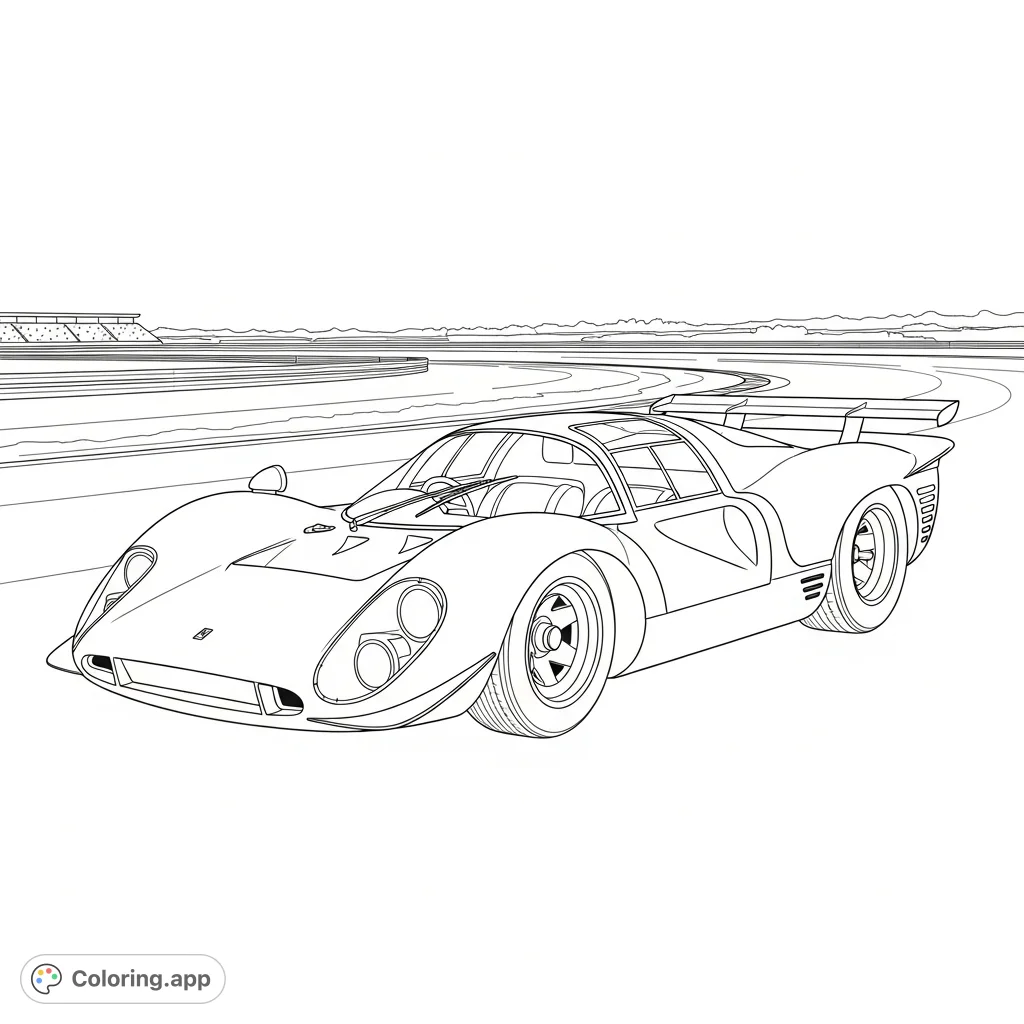
A thrilling vintage endurance racer with simplified curves speeds around a classic racetrack, offering a nostalgic high-speed scene to color and personalize.
Complex art, refined aesthetics
10 months ago
This vintage racer design offers a perfect canvas for exploring advanced layering and blending techniques. Let your creativity flow and enjoy the process of bringing this iconic automotive artwork to life!
Colored pencils are ideal for the intricate details of the car's bodywork and fine lines. Alcohol markers or brush pens work well for creating smooth, even coverage on larger areas like the main body and track. Gel pens can add striking highlights to metallic elements or small details.
Begin by outlining all major sections of the car and track. Start coloring the largest areas first, like the main body and track, using light, even pressure. Choose a simple color scheme (3-4 colors) for the car body to practice staying within lines. Take short breaks to prevent hand fatigue.
Utilize layering to create realistic metallic sheens on the car body, starting with a light base and building up darker tones. Experiment with color blending for smooth transitions on the curved surfaces. Use cross-hatching or stippling for tire textures and subtle background elements. Consider adding cast shadows for depth.
Immerse yourself in the thrill of classic motorsport with this captivating vintage racer coloring page. This free printable showcases a dynamic endurance car on a track, inviting you to unleash your creativity.
The standout feature is the sleek, aerodynamically curved body of the vintage endurance racer, complete with its distinctive long hood and large, functional side air intakes. The driver's cockpit, though simplified, adds to the car's authentic racing appeal.
The backdrop features a wide, open asphalt racetrack, complete with subtle lane markings and patterned curbings. In the far distance, vague shapes suggest grandstands or other trackside buildings, hinting at the excitement of a race day.
This intricate design provides an excellent opportunity to develop advanced coloring skills, focusing on precision for vehicle details and smooth blending techniques for the car's aerodynamic curves. It challenges colorists to maintain consistency across large areas while tackling smaller, complex elements.
Personalize this iconic racer with historical racing liveries or futuristic designs. Use metallic finishes for a sleek body, or add custom graphics. Experiment with tire textures and transparent elements for headlights and windshields.
Unleash your passion for speed and design with this versatile vintage endurance racer coloring page. Download this race car coloring page today and transform your creative moments into lasting memories of automotive art.
This detailed racer coloring page can inspire interest in automotive design and racing history for older children and teens. It helps develop fine motor skills, encourages patience, and sparks creativity, making it a great activity for a rainy afternoon or a school project on transportation.
The vintage endurance racer coloring page provides a meditative escape for adults who appreciate automotive history and intricate designs. Focusing on the sleek lines and detailed elements can be a stress-reducing activity, offering a satisfying challenge for experienced colorists.
Perfect for automotive club gatherings, Father's Day gifts, car show events, birthday parties for racing fans, or as a relaxing activity during a motorsport broadcast.
Frame your completed masterpiece as art for a garage or office, create personalized greeting cards for car enthusiasts, or incorporate it into a racing-themed scrapbook. It's also perfect for custom posters or unique gifts.
A vintage endurance racer, clearly inspired by the Ferrari 330 P4, positioned centrally on a racetrack. The vehicle features long, sweeping aerodynamic curves, a low-slung body, and prominent, rounded fenders. Large, distinct side air intakes are visible behind the front wheels. A subtle rear spoiler extends from the tail. The car is angled slightly, suggesting motion. In the background, faint lines indicate the asphalt track surface and curbings, with a hint of grandstands or distant trackside structures.